
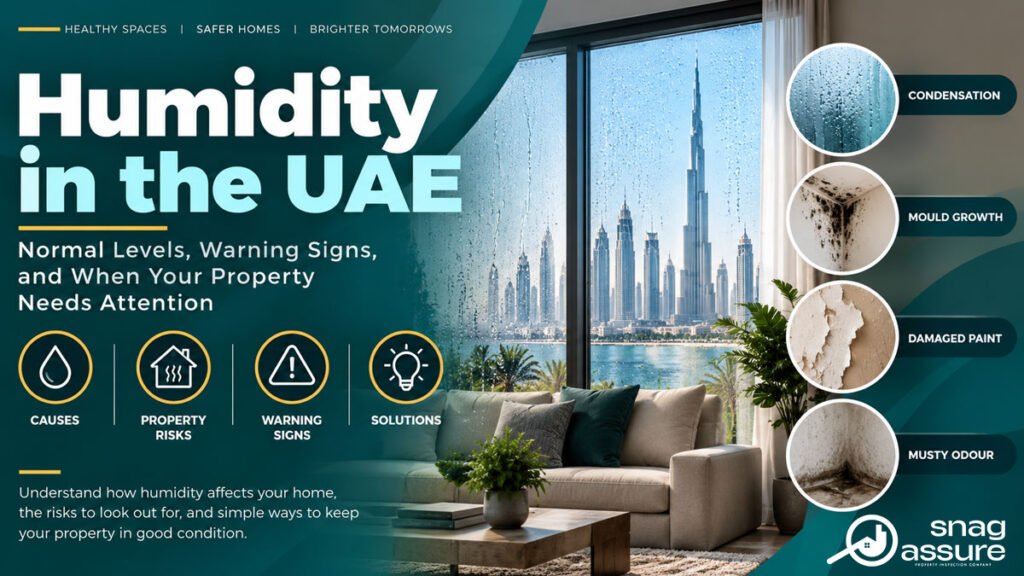
The UAE’s hot climate can bring periods of high humidity, particularly during warmer months and in coastal areas. While humidity is a normal part of the UAE environment, excessive moisture inside a property can sometimes contribute to condensation, mould, musty odours, damaged finishes and other moisture-related concerns.
For homeowners, tenants and property buyers, understanding humidity in the UAE can help identify when normal environmental conditions may be turning into a property issue.
What Is Humidity?
Humidity refers to the amount of water vapour present in the air. It is commonly measured as relative humidity (RH) and expressed as a percentage.
Indoor humidity can change depending on:
- Outdoor weather conditions
- Temperature
- Air conditioning
- Ventilation
- Bathrooms and kitchens
- Plumbing conditions
- Water leaks
- Building construction and sealing
Because the UAE can experience both high temperatures and high outdoor humidity, maintaining comfortable indoor conditions can be important for properties in Dubai and other parts of the country.
What Is a Normal Indoor Humidity Level?
For many indoor environments, a relative humidity level of around 30% to 60% is generally considered a comfortable range.
However, indoor humidity can naturally fluctuate depending on the season, building design, air conditioning and ventilation.
A temporary increase does not necessarily mean there is a property defect. More attention may be required when humidity remains consistently high or is accompanied by visible signs of moisture.

Why Can Humidity Be High Inside UAE Properties?
Several factors can contribute to elevated indoor humidity.
1. Outdoor Humidity
Properties in coastal areas can be exposed to humid outdoor air. Opening doors and windows for extended periods can allow moisture to enter the property.
2. Air Conditioning Issues
Air conditioning helps cool indoor spaces and can also remove moisture from the air.
If an AC system is not operating properly, has inadequate airflow or has a condensate drainage problem, it may contribute to moisture-related issues.
3. Poor Ventilation
Bathrooms, kitchens and laundry areas naturally produce moisture.
Without sufficient ventilation, this moisture can remain indoors and increase humidity.
4. Plumbing Leaks
A leaking pipe, tap, toilet or connection can introduce additional moisture into a property.
Hidden leaks can sometimes affect walls, cabinets, floors or ceilings before the problem becomes obvious.
5. Water Ingress
Moisture can also enter a property through damaged seals, windows, balconies, roofs or other building elements.
If the same area repeatedly develops dampness or staining, the source should be investigated.
Warning Signs of Excess Moisture
High humidity does not automatically mean that a property has a defect. However, certain signs can indicate that moisture deserves further attention.
Condensation
Persistent condensation on windows, walls or other surfaces may indicate that indoor air contains significant moisture relative to the surface temperature.
Musty Odours
A persistent musty smell can be associated with damp conditions. If the smell continues despite normal cleaning and ventilation, the source should be investigated.
Mould Growth
Mould can develop in areas where moisture remains present for extended periods.
Common areas to check include:
- Bathroom corners
- Window frames
- Behind furniture
- Under sinks
- Around AC areas
- Wardrobes
- Ceiling corners
Peeling or Bubbling Paint
Paint that repeatedly peels, bubbles or becomes discoloured can sometimes be associated with moisture affecting the underlying surface.
Damp Walls or Ceilings
Dark patches, water stains or damp areas on walls and ceilings may indicate a moisture source that needs further investigation.

Humidity vs Water Damage
If your property continues to experience high humidity, dampness, condensation or mould despite normal AC operation and ventilation, it may be worth investigating the cause.
You may want to pay particular attention to:
- Repeated water stains
- Damp walls
- Ceiling discoloration
- Persistent mould
- Musty odours
- Moisture around AC units
- Plumbing leaks
- Damaged seals
- Recurring condensation
These signs do not necessarily prove that there is a major construction problem, but they can indicate that further investigation is appropriate.
Humidity and Property Inspection in Dubai
For property owners and buyers, moisture-related problems can be particularly important during a property inspection in Dubai.
An inspection can help identify and document visible signs of:
- Moisture
- Dampness
- Water staining
- Plumbing issues
- AC-related concerns
- Damaged finishes
- Poor sealing
- Other visible defects
For newly completed apartments and villas, these observations can also form part of a wider property snagging inspection before handover.

Humidity and Property Inspection in Dubai
For property owners and buyers, moisture-related problems can be particularly important during a property inspection in Dubai.
An inspection can help identify and document visible signs of:
- Moisture
- Dampness
- Water staining
- Plumbing issues
- AC-related concerns
- Damaged finishes
- Poor sealing
- Other visible defects
For newly completed apartments and villas, these observations can also form part of a wider property snagging inspection before handover.
Why Check Humidity-Related Issues Before Handover?
When buying a new property, visible moisture problems should not simply be overlooked.
Early identification can help buyers document concerns and communicate them to the developer or responsible party.
A professional inspection can also provide photographs and descriptions of observed defects, creating a useful record of the property’s condition at the time of inspection.
Professional Property Inspection and Snagging in Dubai
SnagAssure provides property inspection and snagging services in Dubai, helping property buyers identify and document visible defects before handover.
Our inspections can cover important areas of an apartment or villa, including:
- Electrical systems
- Plumbing
- AC and HVAC
- Flooring
- Walls and ceilings
- Doors and windows
- Kitchens
- Bathrooms
- Finishing work
- Visible moisture-related concerns
A detailed inspection report can help buyers understand the condition of their property and document issues that may require attention.
Final Thoughts
Humidity in the UAE is a normal part of the local climate, but persistent moisture-related signs should not always be ignored.
Condensation, mould, dampness, water stains, musty odours and peeling paint can sometimes indicate that a property needs further investigation.
Whether you already own a property or are preparing to take handover of a new apartment or villa, understanding humidity and recognising potential warning signs can help you identify issues early.
Buying or handing over a property in Dubai? Contact SnagAssure for professional property inspection and snagging services.